Ford Towing

Ford Towing

STAUFFER MOTORS | TILLSONBURG, ON

FORD TOWING
MADE SIMPLE.

You need to move big stuff, and Stauffer Motors is here to help. Discover how to choose the right Ford for your towing needs, understand towing capacity, and make sense of the numbers that matter.

Your local Ford experts since 1929
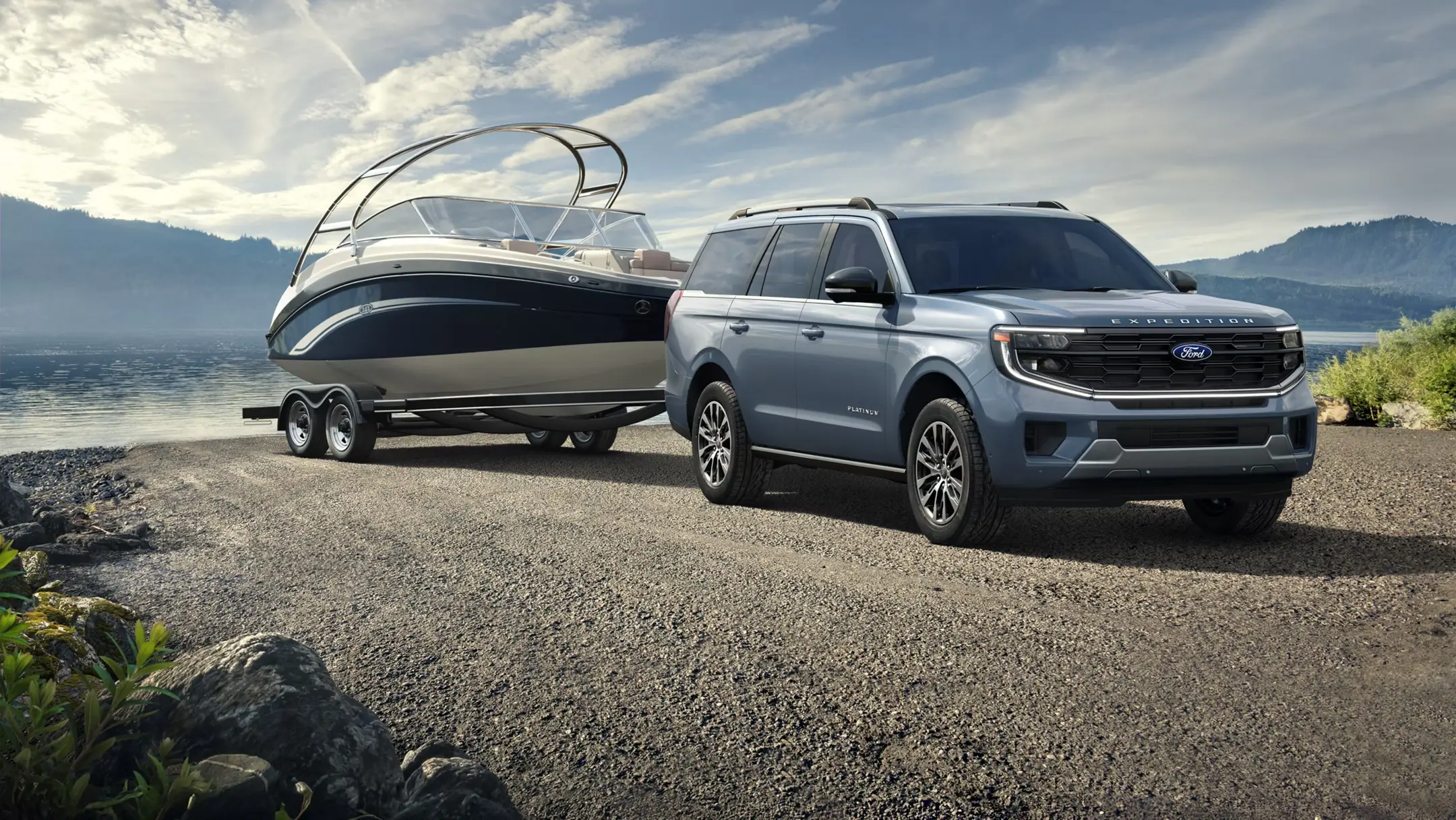
Ford Expedition towing a boat trailer by a lake
THE FUNDAMENTALS

Three Things to Consider When Towing

Choosing the right vehicle is about more than just how much it can pull. Understanding these three factors will help you make a more informed towing decision.

01
⚙

Engine Performance

Horsepower and torque work together to deliver high-end and low-end power, respectively. Torque helps get your vehicle moving from a standstill when towing, while horsepower supports acceleration at higher speeds, such as when passing on a highway.

POWER & PERFORMANCE
02
⇄

Transmission

Towing can put additional strain on your transmission as it works harder to handle extra weight and resistance. Maintaining the proper transmission fluid level and following recommended service intervals can help protect performance.

VEHICLE HEALTH
03
⚖

Braked vs. Unbraked

Braked towing capacity applies when your trailer has its own braking system. Unbraked towing capacity applies when it does not. Trailers with independent braking can allow for higher rated towing loads, subject to your vehicle’s specifications.

TOWING SAFETY

*Horsepower and torque are independent attributes and may not be achieved simultaneously.

KNOW YOUR NUMBERS

Towing Terms, Explained.

GVWR, GCWR, GAWR and more. Here’s a quick visual guide to help you understand the important weight ratings involved in towing.

Illustrated towing terminology infographic explaining GVWR, GCWR, GAWR, gross trailer weight, tongue weight, curb weight and payload
ⓘ

Important to know: Your Ford’s actual towing and payload capabilities depend on its specific configuration, equipment, passengers, cargo and trailer setup. Always consult your vehicle’s documentation and Ford’s official towing specifications.

YOUR QUESTIONS, ANSWERED

Ford Towing FAQs

From payload ratings to tongue weight, we’ve answered some of the most common questions about towing with your Ford.

Talk to Our Team →
What are payload capacity and towing capacity, and how do I calculate both?

Payload capacity refers to the maximum allowable weight of cargo and passengers that a vehicle is designed to carry.

Towing capacity refers to the maximum weight of a fully loaded trailer that a vehicle is rated to tow.

For towing capacity, refer to Ford’s VIN-based towing calculator or the appropriate Ford RV Towing Guide. The towing guide’s general figures may not account for every option, accessory, passenger or cargo load.

Payload capacity is commonly determined using:

Payload = GVWR − Curb Weight

For your specific vehicle, use its certified payload information and account for all equipment and modifications.

What is Gross Vehicle Weight Rating (GVWR)? Is it the same as towing capacity?

Gross Vehicle Weight Rating (GVWR) represents the maximum allowable loaded weight of the vehicle itself, including the vehicle, occupants, cargo, accessories and applicable trailer tongue or pin weight.

Towing capacity refers to the maximum loaded trailer weight that the vehicle is rated to tow. These are different ratings, and both must be respected when towing.

What is Gross Combined Weight Rating (GCWR), and how do I find it?

Gross Combined Weight Rating (GCWR) is the maximum allowable combined loaded weight of the tow vehicle and trailer, including passengers and cargo.

Refer to the Ford VIN-based towing calculator or your vehicle’s applicable Ford RV Towing Guide to find the specified GCWR.

When checking your towing setup, also consider the vehicle’s GVWR, axle ratings, hitch limits and the weight of your loaded trailer.

What is tongue weight, and how do I calculate it?

Tongue weight is the downward force the trailer coupler places on the hitch. Proper tongue weight is important for handling and trailer stability.

For conventional trailers, tongue weight is often approximately 10% to 15% of the loaded trailer weight. Fifth-wheel and gooseneck trailers may typically require approximately 15% to 25% pin weight.

To determine actual tongue weight, fully load the trailer as it will be used and measure the load using suitable scales or onboard measuring equipment, if equipped.

Ensure the measured weight falls within the limits specified by Ford, the hitch manufacturer and the trailer manufacturer.

What does curb weight mean, and how do I calculate it?

Curb weight is the weight of a vehicle with its standard equipment and operating fluids, including fuel, but without passengers or cargo.

The most reliable way to determine the actual curb weight of your vehicle, including any installed equipment, is to have it weighed on a suitable vehicle scale.

What is Gross Axle Weight Rating (GAWR)?

Gross Axle Weight Rating (GAWR) is the maximum allowable weight supported by an individual axle.

Your vehicle has separate front and rear axle ratings, typically displayed on the certification label inside the driver’s door jamb.

Loading and towing must not cause either axle to exceed its respective GAWR. Proper weight distribution helps maintain predictable handling and performance.

WE’RE HERE TO HELP

Ready to Find Your
Next Towing Vehicle?

Whether you’re towing a boat, camper, work trailer or recreational equipment, our team at Stauffer Motors can help you explore your Ford options.

STAUFFER MOTORS LIMITED

685 Broadway Street
Tillsonburg, ON N4G 4H1

519-842-3646

PROUDLY SERVING TILLSONBURG SINCE 1929